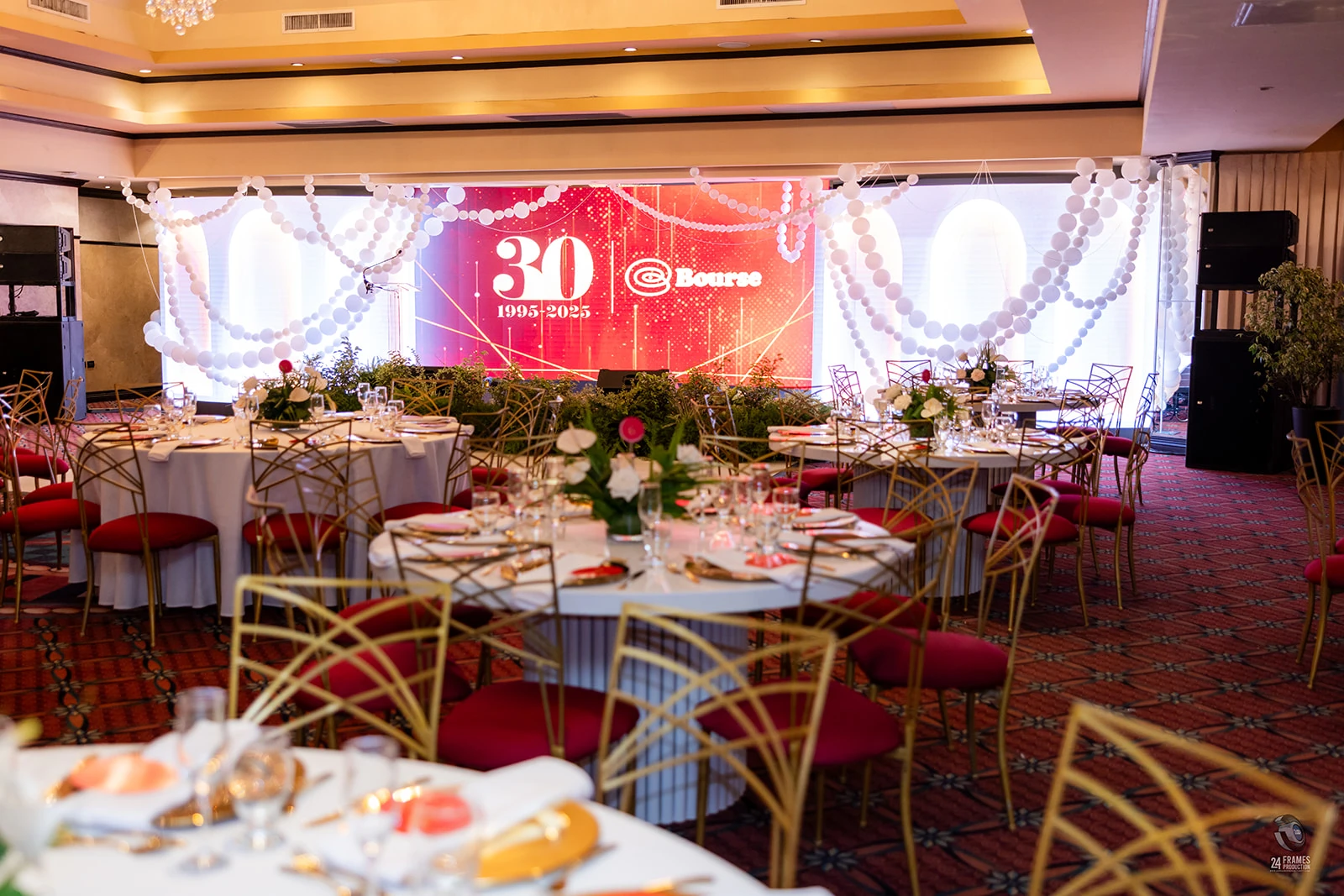
Virtual events hosts all your attendees online whilst live events are what we have been accustom to with all attendees and stakeholders attending in person.
To host a live (in person) event meant that you needed a long list of things.
Firstly, you needed a plan of action for the event. This plan would have included the objective for hosting the event, who your target audience was, what the agenda would entail, logistics and the budget to support the execution.
Then you'd have to consider a venue that had the right "feel" and amenities for the event and that could hold the number of people you were expecting to show up.
Marketing. Whether it was social media advertising, email marketing, or traditional newspaper, radio, and TV ads, you had to let people know about the event.
For in-person events, decor was also on the list. You'd need decor that would help set the tone for your event from the moment your attendees walk into the room.
Catering was another BIG one. You'd have to estimate how many people were expected to show up, plus special guests and staff so you know how much food to cater. You'd have to think, "The event is only 6 hours long. Do we give them 2 meals and a snack? What's the menu?"
You'd consider whether entertainment was necessary or even appropriate for the event. Or maybe, if you had a funny MC that would be enough.
What about audiovisual setup? Maybe you needed some mics, a cameraman, and some screens?
And finally, as you looked at the long list of things that needed to be done for your event, you hired an event management team to make sure everything was well-coordinated and ran smoothly on the day, if they were not involved in the planning stage.
Now, when you think of virtual events in 2021 you're assuming (or hoping?) that it's a shorter list with a lot less work? Here's the reality, it may be a shorter list, but it's still A LOT of work to coordinate.
It's important for you to understand what a virtual event *really*entails. And no, it's not just about upgrading your Zoom plan from Basic to Pro.
WITH EVENTS GOING VIRTUAL, YOU STILL NEED TO HAVE:
- A solid, well-thought-out plan that still outlines your objectives, audience, content/agenda, strategy and budgeting.
- A platform to deliver the content. This is where your attendees will be joining your event. This starts as basic as Zoom and Microsoft Teams and then goes to platforms that deliver opportunities for sessions, sponsors, exhibitors and networking. The size of your audience is not as critical as most platforms can easily be upgraded for a growing audience - yup, some can host up to 10,000 attendees.
- A venue to stream or record from. One with great internet connection to support your stream if it's going to be live.
- A strong marketing strategy. As webinars and other virtual events are a dime a dozen these days, you'll want to set yourself apart. You'll need to stand out from the crowd to draw in your target audience in and most importantly help your audience the value they can get from your event.
- Good entertainment since you're competing with more distractions as people are working from home. The thing is, the entertainment doesn't always have to be a performer. You can add other fun ideas, like activities with prizes for those who are most engaged.
- Lots, and lots of tech! From your camera production to your audio support, you will have to determine what will be required to deliver your event.
Ready for the Next Step?
Need more than guidance for your next event?
Bring TCJ into the process for strategy, planning, coordination, production, virtual or hybrid management, or practical team training.

From TCJ Management
Tisha C. Jack
TCJ shares practical guidance shaped by active experience across corporate events, weddings, virtual and hybrid experiences, consultancy and professional training.
Meet Tisha & TeamTCJ